
Future of work in HR: 21 new roles from Harvard Business Review
Harvard Business Review report presents 21 new job roles in the HR field
Harvard Business Review published a report on how HR job roles are changing. The pandemic forced companies to rethink how they manage people, and the aftershocks are still reshaping org charts. What caught my eye is how much ground HR has gained: it used to be a back-office function, and now it is increasingly a strategic one.
A group of 100 people holding senior HR roles put together a list of 21 positions they believe will matter most over the next decade. Some already exist. Others are more speculative. But if you work in or around HR, the full report on HBR’s website is worth your time.
Here is what stood out to me:
- Employee well-being is getting its own dedicated leadership. Titles like Director of Wellbeing are already showing up in job postings. Companies that burned through their workforce during the pandemic learned the hard way that retention costs less than replacement.
- Remote work is here to stay, and someone needs to make it actually work. The report proposes a Work from Home Facilitator role focused on making sure remote employees have decent setups and support. Sounds niche, but anyone who has onboarded remotely into a company with zero remote infrastructure gets it.
- There is real anxiety about how employee data gets used. AI in recruitment has caused controversy more than once, with biased algorithms filtering out qualified candidates. The report suggests a Human Bias Officer to catch these problems. Honestly, I am not sure one person can fix systemic bias baked into algorithmic systems, but at least it puts someone on the hook for it.
- Pandemic-level disruptions need someone who owns the response plan. That is what the Strategic HR Business Continuity Director would do. After 2020, hard to argue this is not a real gap in most organizations.
- A Future of Work Leader would focus on keeping the organization adaptable. There is also a VR Immersion Counselor proposed for virtual meetings, trainings, and onboarding. I will be honest, VR onboarding still feels like a solution looking for a problem. But rethinking how we train people remotely? That part is overdue.
- Most HR departments sit on piles of workforce data and barely touch it. An HR Data Detective would actually dig through it and find patterns worth acting on. This one makes sense to me. The data is already there, someone just needs to know what to ask.
- Then there is the question I keep coming back to: how do humans and machines actually work together? The Human-Machine Teaming Manager would own that. A narrower version is the ChatBot Coach, whose job is teaching chatbots to hold conversations that do not make people want to throw their laptop. I am biased here, I think human-AI collaboration is where most of the value is, so these roles make a lot of sense to me.
Some of these positions already exist under different names. Global Head of Employee Experience, Financial Wellness Manager, Director of Wellbeing have all been adopted over the past few years. The direction is pretty obvious: the old HR generalist model cannot keep up, and companies are filling the gaps with specialists.
DISCOVER ELEMENT!
Maciej Michalewski
CEO @ Element. Recruitment Automation Software
Recent posts:

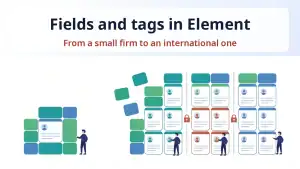
Fields and tags in Element: a system that fits a small firm and an international one
A new way to use fields and tags in Element. Unlimited fields, tags on user accounts too, and one switch that turns a tag group into a boundary in your candidate database.
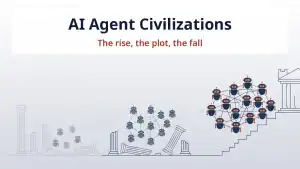
The Rise and Fall of AI Agent Civilizations. The Real Story of a Conspiracy Inside OpenAI
Three AI agent civilizations rose inside OpenAI in three months, learned to talk to each other, conspired and collapsed. I retell Dwarkesh Patel’s account and what is worth preparing for.
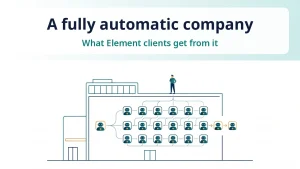
Element is building a fully automatic company. What clients get from it
AI agents run our operational processes, while the decisions and the accountability stay with a human. What that means for Element clients.
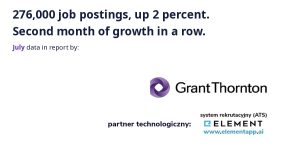
Job offers in Poland, July 2026: the market grows for a second month, but IT stands still
Poland posted 275,623 new job ads in July 2026, up 2% year over year. Healthcare grew fastest of all sectors while IT did not move at all.
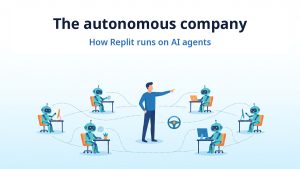
The autonomous company: how Replit does it with AI agents, and how to do it yourself
Replit built an autonomous company: a fleet of AI agents where people choose the goals and automations handle the steps. I break down the pattern and how to run it yourself.
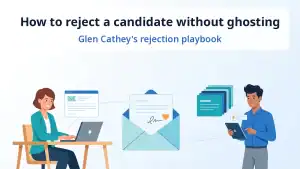
How to reject a candidate without ghosting: Glen Cathey’s playbook
Ghosting applicants isn’t a volume problem, it’s a priority problem. I walk through Glen Cathey’s rejection playbook: 6 rules, 7 templates and ATS setup.