
US moves closer to legalizing LinkedIn data scraping
Since 2017, LinkedIn has been fighting a legal battle against scraping — the automated collection of data available on websites. I wrote about this a few years ago in an article about automating LinkedIn activity. LinkedIn automation was a hot topic back then, especially in the context of browser extensions used by recruiters and ATS systems.
What’s the case about?
hiQ Labs is a startup that provided corporations with data predicting which of their employees were likely to quit. hiQ got this data from LinkedIn, using scraping tools to automatically collect information from public user profiles.
It started with a cease-and-desist letter from LinkedIn to hiQ, followed by LinkedIn blocking hiQ’s access to the platform. hiQ sued LinkedIn, arguing that LinkedIn’s actions restricted competition and violated state and federal laws. hiQ also claimed that LinkedIn doesn’t hold exclusive rights to user data, and that collecting publicly available data doesn’t violate privacy rules.
First ruling.
In 2017, a California court ordered LinkedIn to give hiQ access to user data. This was LinkedIn’s first — and very public — defeat. The court’s reasoning included:
- hiQ used publicly available user data.
- hiQ acted in the public interest (positive impact on free speech and the economy, unlike LinkedIn’s actions against hiQ, which restricted competition).
- LinkedIn’s actions made hiQ’s business impossible, while hiQ’s scraping had no negative impact on LinkedIn’s revenue.
- hiQ acted in good faith and had informed LinkedIn about its activities.
- LinkedIn doesn’t own the copyright to user data — the users themselves do.
Second ruling.
LinkedIn appealed, and in 2019 the appellate court ruled that the Computer Fraud and Abuse Act (CFAA), which LinkedIn had accused hiQ of violating, had not been breached. Another win for hiQ.
Third ruling.
LinkedIn appealed again, this time to the Supreme Court, which provided guidance on interpreting the disputed provisions and sent the case back to the appellate court. The new ruling, issued on Monday, April 18, 2022, confirmed that scraping publicly available data does not violate the CFAA.
It’s not over.
LinkedIn isn’t giving up and has already announced further legal action to fight scraping.
Does this case affect regulations in Poland or the EU?
No. Poland and Europe operate under different legislation. US court rulings have no legal force in the EU.
Can you collect and process LinkedIn user data in Poland without their consent?
You can, under certain conditions — but that’s a topic big enough for its own article. I covered GDPR-compliant sourcing and direct search in a separate GDPR recruitment guide.
DISCOVER ELEMENT!
Maciej Michalewski
CEO @ Element. Recruitment Automation Software
Recent posts:

Career in the age of AI agents: what really counts, per Phil Chen
Phil Chen (Helm AI, Scale, OpenAI, DeepMind) argues that in the age of AI agents, finding problems, the last mile and reputation matter more than solving tasks. A summary plus my HR take.
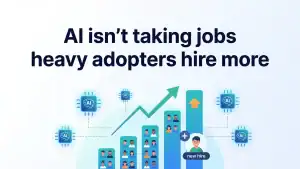
AI isn’t taking jobs. Companies that invest in it hire more
A Ramp study of 21,599 US firms finds that companies investing seriously in AI grow headcount 10.2% in two years, including entry-level roles. The data pushes back on AI job-loss panic.

Open AI trainings I run in person
Most of my AI trainings are closed, but a few are open with my own authorial program. Here is what I run with EY and Altkom Akademia, and how to sign up.
Element is developing faster than ever before
I am not a programmer, yet today I generate thousands of lines of Element’s code with AI. How vibe coding changed the pace of our recruitment system.
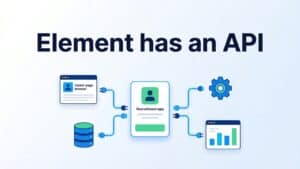
Element now has an API: recruitment that plugs into your own systems
Element now has a public API (v1-beta). I explain what integrations give recruitment-system clients, the mistakes I made and what they taught me.

Recruiting from your phone: Element is now mobile, built by AI
Element’s mobile views are in production. Recruiters and hiring managers now run the process from a phone, and AI wrote 15,000 lines of code in five weeks.