
Video messages in recruitment
What are video messages and how do they differ from video calls?
A video call or video conference is a live remote meeting between two or more people using video.
Video messages are different because the participants don’t meet simultaneously. Messages are recorded and sent the same way you’d send a text or a chat message. Recording and viewing can happen at completely different times, sometimes hours or days apart. This time gap is also called asynchronous communication — so you may see terms like “async video” or “asynchronous video messages.”
Video messages in recruitment
In recruitment, async video messages are mainly used to:
- Send candidates interview questions in video form.
- Let candidates record self-presentations, answers to recruiter questions, or their own questions.
- Present a job offer as a video recording from the employer.
- Update candidates on recruitment progress via video.
Example of video messages in recruitment
Here’s an example using VocalVideo, an app that lets you create application questions and record candidate responses as video. In this example, a candidate is going through a recruitment process at Wonolo, which uses VocalVideo. The questions are presented in text form, and the candidate records video answers.
Benefits of video messages in recruitment
- Saves time by reducing the number of live meetings with candidates.
- Standardizes communication — every candidate gets exactly the same questions, asked by the same person in exactly the same way. This helps ensure equal treatment.
- Makes collaboration easier between everyone involved in the hiring process, since they can watch candidate videos at a time that works for them.
- Presenting the employer and their offer in video form is a stronger pitch than text and makes a better impression on candidates.
- Includes nonverbal communication — people see each other’s gestures and expressions, which you lose in email or chat.
- Eliminates the painful back-and-forth of scheduling a conference call that works for everyone, and makes communication easier across time zones.
Drawbacks of video messages in recruitment
- Harder to search and review. Video messages exchanged during a recruitment process aren’t as easy to skim as text. Automatic transcription can help here.
- Feels less personal than a live video call. The person recording, especially if they don’t know the recipient, can feel like they’re talking to a computer rather than another human.
- Requires more effort than text messages. You need a camera, decent lighting, a microphone, speakers or headphones, and a quiet space to record and play back messages.
Summing up
Recruitment uses many forms of communication — text (email, chat), voice (phone), live video (conferencing), and async video (video messages). Picking the right one for each stage matters, especially in complex workflows with multiple stakeholders. Get the match right and you save everyone’s time.
DISCOVER ELEMENT!
Maciej Michalewski
CEO @ Element. Recruitment Automation Software
Recent posts:

Career in the age of AI agents: what really counts, per Phil Chen
Phil Chen (Helm AI, Scale, OpenAI, DeepMind) argues that in the age of AI agents, finding problems, the last mile and reputation matter more than solving tasks. A summary plus my HR take.
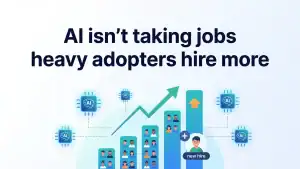
AI isn’t taking jobs. Companies that invest in it hire more
A Ramp study of 21,599 US firms finds that companies investing seriously in AI grow headcount 10.2% in two years, including entry-level roles. The data pushes back on AI job-loss panic.
Open AI trainings I run in person
Most of my AI trainings are closed, but a few are open with my own authorial program. Here is what I run with EY and Altkom Akademia, and how to sign up.
Element is developing faster than ever before
I am not a programmer, yet today I generate thousands of lines of Element’s code with AI. How vibe coding changed the pace of our recruitment system.

Element now has an API: recruitment that plugs into your own systems
Element now has a public API (v1-beta). I explain what integrations give recruitment-system clients, the mistakes I made and what they taught me.

Recruiting from your phone: Element is now mobile, built by AI
Element’s mobile views are in production. Recruiters and hiring managers now run the process from a phone, and AI wrote 15,000 lines of code in five weeks.