
AI is not causing mass layoffs - what the report really says

2025-11-16

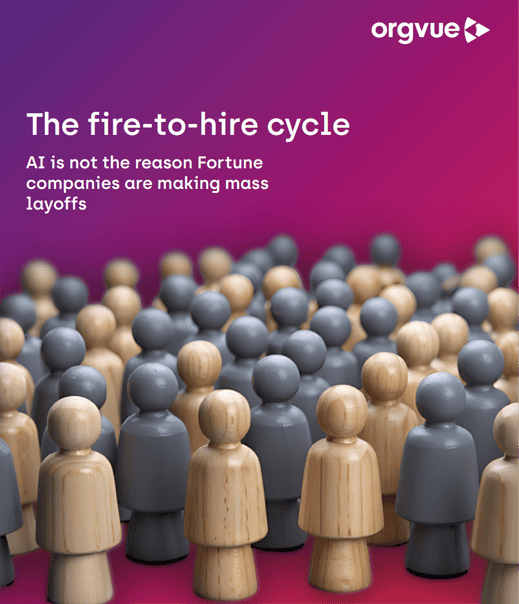
It’s worth confronting opposing views and data that challenge our intuitions. That’s exactly the case with the “The Fire to Hire Cycle” report, which I came across through the Horyzont AI newsletter. The newsletter’s authors say it plainly: “artificial intelligence is not the main cause of mass layoffs in corporations and, what’s more, hasn’t lived up to expectations.” The report itself opens with: “AI is not behind the layoff trend among the largest companies in the US.

The data behind this claim is solid. Fortune 100 companies laid off more than 86,000 people in recent months, but “nearly all of these organizations are simultaneously actively hiring.” In July alone, they posted 58,000 new job openings. The newsletter went so far as to say that “this debunks the myth that machines are displacing people,” and that the automation-causes-layoffs story has more to do with press headlines than with actual data.

Low real AI adoption in everyday work

Skills data only confirms that AI hasn’t yet become a widely used tool in business. The report points out that “only one in ten job postings directly mentions AI, and just 6 percent specify particular tools or platforms.” That’s very little given the scale of public debate.

But I wonder whether the frequency of AI mentions in job postings is even a meaningful indicator. Do job ads mention proficiency in Office, or basic computer and internet skills? Using chatbots became obvious so quickly and is so intuitive that I doubt we’ll ever see a wave of job listings adding it as a formal requirement.

The absence of “AI skills” in job postings also tells us that chatbots and other AI tools are still primarily work support. Hallucination rates remain too high to fully automate your tasks. In areas like recruitment, legal regulations require human oversight regardless of whether hallucinations occur. That’s why a salesperson’s primary tool is still a CRM, a recruiter’s is still an ATS system, and AI is just a supplement.

Soft skills are getting more important, not less

The report spends considerable time on soft skills. The authors write that “soft skills remain irreplaceable in an AI-driven world,” and demand for these competencies shows up in 98 percent of job postings that include AI requirements. I’d agree. It’ll be a good few years before AI can effectively handle soft skills. It’s already decent at faking them, sometimes impressively so, but lack of trust and regular blunders mean the technology is rightly seen as immature and needing constant oversight.

What does the job market look like by profession?

Horyzont AI’s newsletter lists a few numbers:

  • “global job postings dropped by 8 percent”

  • “graphic designers down 33%, photographers down 28%, screenwriters down 28%”

  • “machine learning engineers up 40%”

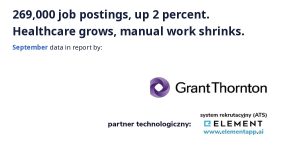
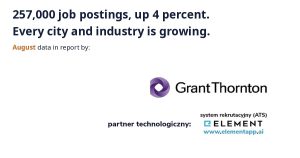
This data confirms what we’ve been reporting for months, a steady decline in job postings in Poland. In a separate article, I covered the latest Grant Thornton report, and in the commentary I presented numbers confirming the global cooling of the job market.

Professions vulnerable to generative automation are already feeling market pressure. Technical roles built around AI are climbing, which is visible in conversations with companies looking to invest in their tech infrastructure.

None of this is surprising, at least not for those who are paying attention. Or who read this blog.

Read more about Element here.

DISCOVER ELEMENT!

Fast, agile and user-friendly ATS created by recruiters for recruiters
Picture of Maciej Michalewski

Maciej Michalewski

CEO @ Element. Recruitment Automation Software

Facebook
Twitter
LinkedIn

Recent posts: