Automation and Dehumanization of Recruitment: How ATS Systems Work

2019-02-28

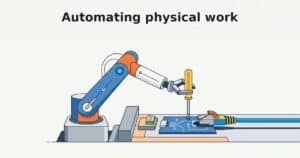
The amount of information about automation entering our lives is growing dynamically. According to Gartner’s report, 2019 was the year of automation. Manufacturing, transportation, warehousing, management, accounting, analysis, translation, decision-making, as well as sales and recruitment processes are all being automated. What does this mean?

In the Amica high-bay warehouse, 26,000 pallet spaces can theoretically be serviced by just one person. Hundreds of people will no longer find work there. In supermarkets, self-checkout registers are becoming increasingly common. Yesterday I called the Orange helpline and heard “Hello, I’m Max, the voice of artificial intelligence.” According to reports, the list of professions that will certainly disappear soon is very long. Among them we can find:

  • accountants,
  • freight forwarders,
  • telemarketers,
  • drivers,
  • retail salespeople,
  • packers,
  • real estate agents,
  • dispatchers,
  • data entry operators,
  • and many others.

What About the Recruitment Industry?

The number of available ATS systems that automate recruiter work to varying degrees is constantly growing. In an article about LinkedIn work automation, I described several examples of automation entering the recruitment industry. The current state of knowledge and technological development allows us to state with certainty that most activities performed during the recruitment process can be carried out by algorithms. The best ATS systems — we are working hard to ensure that Element is among them — will certainly leverage innovative technologies to increasingly optimize recruiter work and reduce recruitment costs.

ATS Development and Recruitment Automation

ATS systems are moving toward ever-greater automation of recruitment processes. The development of ATS systems inevitably leads to a point where, after entering a job description into the system, algorithms will search for and pre-screen candidates available in the employer’s internal resources and external ones, such as LinkedIn.

When screening candidates, the ATS will verify the presence of key phrases in the profile and make a preliminary assessment based on them. In doubtful cases, the algorithm will send the candidate a message asking about missing qualifications or competencies. The message will be sent through one of the communication channels discovered by the algorithm searching for the candidate’s contact data, most commonly via email or SMS. In the case of email, the algorithm will independently guess the correct email address of the candidate, using a trial-and-error method and DNS server queries. There are already many applications on the Internet for finding personal data, including phone numbers.

Good morning, Ms. Agnieszka. I noticed that you have been working as a secretary for 3 years and are fluent in English. In the content of your profile, I see that you also speak French at a communicative level. I am looking for someone just like you! I would just like to ask — can you touch-type on a computer?

This is what a message sent by an algorithm might look like — one that, in a single second, finds Ms. Agnieszka’s profile, reads its content, and locates the information it is looking for. The algorithm then qualifies the candidate for a supplementary question about touch-typing skills (let’s assume this is an important element of the employer’s requirements). The personalized message is created and sent to the candidate in a fraction of a second.

Developing such an algorithm is no problem today, and we at Element are working on precisely such solutions. In one second, an application can carry out hundreds of similar operations, and with appropriate infrastructure, thousands.

What happens if Ms. Agnieszka replies that she has been touch-typing for many years?

The algorithm can interpret Ms. Agnieszka’s response. In reality, it is no longer a single algorithm but many complex programs, neural networks, and NLP (Natural Language Processing) technologies. You surely remember the video showing how Google Assistant books a table at a restaurant or a hair salon appointment. I am referring to exactly that kind of communication.

Ms. Agnieszka, that works out perfectly! May I present you with an interesting career development opportunity?

Artificial intelligence continues the conversation, builds a relationship with the candidate, inquires about salary expectations and availability. Ms. Agnieszka does not even suspect she is talking to an algorithm.

The next stage is a video interview, during which AI analyzes the facial expressions, voice, and of course the content of Ms. Agnieszka’s answers. Unlike a human, the algorithm will not miss even the slightest change in gaze direction, muscle twitch, or voice tone. Content and behavior analysis occurs in real time, and follow-up questions are generated in fractions of a second.

It will be hard to resist the assessment made by a well-developed artificial intelligence (I emphasize “well-developed” because, just like a human, AI also needs time to mature and “grow wise”). Thus, it will be algorithms making that final, most important decision — initially, of course, only as advisors for entry-level positions.

AI-Powered Recruitment Will Be the Norm for Future Generations

This may sound like science fiction. However, I assure you that for future generations, conducting recruitment processes in the manner described above will be an everyday reality.

On the day I wrote this text, we had several calls about recruitment chatbots, neural networks reading profile content, systems recording recruitment interviews and extracting key fragments for the recruiter. And at the end of the day, in one of the Facebook groups, we found a link to the Unbiasify application, which hides the name, surname, and photo of a social media profile owner from the recruiter. It hides them so that the recruiter is not guided by bias during screening (diversity policy). Unbiasify reminded me that technology is not rushing solely toward automating recruitment processes. Technology is also rushing toward dehumanizing the human being.

Recruitment Systems and the Dehumanization of Recruitment

What is today’s recruitment process? Initial profile screening, phone verification, structured interview, behavioral interview, competency tests. All of this serves to prepare a detailed candidate profile consisting of a list of indicators and scores that interest us. Ms. Agnieszka: English 7/10; French 6/10; touch-typing 8/10; ability to work under time pressure 6/10; time management skills 4/10; work motivation — money, skill development. In accordance with our diversity policy, we will use Unbiasify, hiding the name, surname, and image of the candidate. We will not ask about hobbies (because it might turn out the candidate is interested in a religion toward which we have a bias), we will not ask about sports (the candidate might have a disability), we will focus exclusively on the aptitude for the job. We will stop talking to Ms. Agnieszka, who is a human being. We will start talking to Candidate A, with indicators X, Y, Z.

Would you be surprised if it turned out that Ms. Agnieszka was actually an artificial intelligence?

As you can see, applications not only allow us to automate recruitment, but we ourselves are beginning to treat candidates like… nameless and bodiless applications. The boundaries are blurring due to progressive dehumanization. In the abbreviation HR, the letter H is already very small, and the priority is now primarily R. Resources — preferably cheap and reliable, like in the Amica warehouses.

Is It Bad That ATS Systems Will Lead to Automation and Dehumanization?

I do not feel competent enough to judge this. I only know that automation cannot be stopped, and its consequences cannot be avoided. What is more, for years, together with our team of recruiters and programmers, we have been developing our own recruitment automation system within ATS Element. Step by step, we are building the algorithms described above and moving toward implementing artificial intelligence. We are taking action, but we are also reflecting, searching for good models, ideas, and mentors. We talk about what we do and try to raise awareness — above all among candidates, who most often feel wronged.

If you have your own thoughts, agree or disagree with something, I invite you to join the discussion. I only ask for your understanding — I have omitted or touched upon some important aspects only briefly. An exhaustive review of this topic far exceeds my humble capabilities.

DISCOVER ELEMENT!

Fast, agile and user-friendly ATS created by recruiters for recruiters
Picture of Maciej Michalewski

Maciej Michalewski

CEO @ Element. Recruitment Automation Software

Facebook
Twitter
LinkedIn

Recent posts: