
The Great Reorg: companies are rebuilding around AI
I came across a Foundation Capital report in Bartek Pucek’s newsletter. The authors interviewed 25 companies, from 50-person startups to corporations with thousands of employees. Their findings confirm what I have been writing about for months: AI is changing not only how we work, but the structure of the organizations we work in. The shift we are watching is not about people moving faster with AI. It is about companies starting to rebuild from the ground up so they can operate in a completely different model.
The data the researchers gathered speaks for itself. One 120-person engineering team plans to shrink to 25 people. At another company that runs more than 30 microservices, the ratio used to be 0.75 engineers per service. They now plan to drop to 0.1, which means one engineer will oversee work that previously took eight. At a company with a thousand employees, 25-30% of product meetings now start with a working prototype instead of a PowerPoint deck.
Cars on dirt roads
The authors use a sharp historical analogy. When factories switched from steam to electricity in the 1890s, the early gains were small, because manufacturers simply swapped the power source without changing the architecture of the production halls. Real productivity growth only arrived 20-30 years later, when factories were redesigned around what electricity actually enabled.
Most companies today are in the “cars on dirt roads” phase. They give people access to AI, but the org structures, decision processes and workflows stay the same as before AI. Faster individuals do not automatically create a faster organization, especially when the entire scaffolding around them was designed for a world without AI.
I wrote about this phenomenon in the context of how AI intensifies work. HBR research showed that AI paradoxically increases workload, because people take on additional tasks, blur the lines between work and rest, and juggle more things at once. It is the classic symptom of an organization that handed people a new tool without rebuilding how the work gets done.
Four roles that stay on the human side
Foundation Capital identifies four types of roles that will remain human in the new organization. Reading their description, I realized I operate in two of them at the same time.
System architects
These are the designers of the new organization. They decide how people and AI agents work together: what agents can do autonomously, what needs human approval, how performance is measured, and what the escalation paths look like when something breaks. The authors describe this role as the one with the steepest learning curve and the highest leverage in the new organization.
I am a system architect myself. As CEO of Element and as a consultant, I design systems where AI does the operational work while people review the outputs and make the decisions. I build pipelines where AI agents generate code, analyze data and prepare materials, and then either I or my clients verify and approve the results.
Validators
This is the role Foundation Capital calls “the most important new role of this era”. AI agents can already do a significant portion of the work, but in most domains they cannot yet be trusted to do it fully on their own. People have to review, validate and approve what the system produced.
This is my second role. I validate AI-generated code daily, check analyses, verify data accuracy. My experience confirms the report’s observation: validation requires senior-level skills. You have to know what to look for, which mistakes are typical for AI models, and where the system tends to “hallucinate”.
The authors expect demand for validators to follow a bell curve. It is rising now, because companies are only just beginning to deploy agents at scale. It will peak within two to four years. Then, as systems gather enough data to self-improve and self-correct, the need for human validation will start to fall.
Accountability officers
At the very top remain the people who carry responsibility: the CFO who signs the financial statement, the General Counsel who stands in front of a judge, the CTO accountable for a system outage at 3 a.m. As long as regulators, courts and boards are made of people, organizations will need a human interface to those institutions.
Relationship experts
Sales people who build trust over dinner with a client, account managers who navigate the client’s internal politics, HR leaders who shape company culture. These roles stay human because trust between organizations still rests on trust between individuals.
A one-generation problem
One observation from the report worries me in particular, and I have written about it many times. Today’s validators are experts because they did the work themselves earlier as specialists. If AI agents take over all junior work (first drafts of code, initial analyses, basic deliverables), the class of 2035 will never gain that expertise. They will not have the chance to learn through practice.
Foundation Capital calls the validator pool a “single-generation asset” that has to be deliberately renewed. It is an apt label. If we do not find a way to train new experts in a world where AI does the learning work, we will face a skills gap that cannot be closed quickly.
Four types of companies, four futures
The report splits companies along two axes: what they produce (a product or a service) and how they deliver value (digitally or physically). These two dimensions determine how deeply AI can move into a company and how quickly.
Digital product companies (think Salesforce, Figma) are going through the deepest reorganization. Nine traditional functions (engineering, product, design, sales, marketing, CX, finance, HR, legal) collapse into three: R&D, GTM and G&A. Inside each function, a smaller human layer works alongside an agent layer that drafts, executes and analyzes. I saw a similar pattern earlier in the year when reading about how the developer job market is shifting as AI takes over routine code work.
Service companies (BPOs, agencies, law firms, consultancies) are under the heaviest pressure, because their product is the work itself, and AI can increasingly do that work. Companies that make physical products have the largest untapped field, because there is no Claude Code equivalent for mechanical engineering yet. Finally, companies that deliver physical services (doctors, drivers, hospitality) will change mostly in the coordination and admin layer, because the core of the service still requires a human present.
What this means for us
The authors close with a simple recommendation: the most valuable skill in the new organization is systems thinking, the ability to see how the pieces fit together and to design how people work with AI agents.
I can confirm this from my own experience. My daily work today is designing systems where AI executes the tasks and I validate the outputs. I am not writing code by hand any more, but I have to understand code well enough to judge whether what an agent produced is correct. I am not building analyses from scratch, but I have to know which questions to ask and how to verify the answers.
I have already written that traditional office tools are losing their point in a world where AI performs operations without opening any application. I have written about the white-collar recession and how automation is changing the foundations of the economy. The Foundation Capital report ties these threads into a coherent picture: organizations are rebuilding, roles are changing, and the people who can design and validate AI systems will shape the new order.
High agency and a growth mindset are the second condition the authors list. If your instinct is resistance and a hope that AI will not reach your function, you are already behind. The org chart is being redrawn right now, and the people who learn to work with AI agents instead of competing with them will not only survive the reorganization. They will be the ones designing it.
This article is based on the The Great Reorg report published by Foundation Capital.
Read more about ATS here.
DISCOVER ELEMENT!
Maciej Michalewski
CEO @ Element. Recruitment Automation Software
Recent posts:

The Great Reorg: companies are rebuilding around AI
Foundation Capital interviewed 25 companies and found that AI is not just speeding up work — it is forcing organizations to rebuild from the ground up around four human roles.
Gallup 2026: the workplace is cracking and managers lose drive faster than the rest
Gallup State of the Global Workplace 2026: engagement fell to 20%, managers lose drive faster than their teams, and the AI paradox is clear: personal productivity rises, organizational does not.
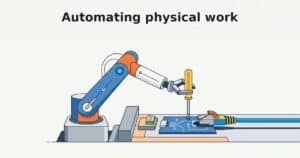
A Polish-founded robot that drives screws faster than humans
A Polish-founded robot that drives screws faster than humans When people think about automation, they usually picture chatbots, image generators, and coding assistants. Meanwhile, AI
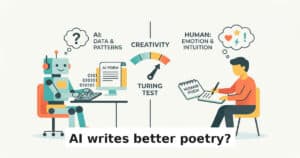
People prefer AI poetry over Shakespeare
A study published in Scientific Reports (Nature) produced results that should interest anyone who thinks human creativity is easy to tell apart from machine output.
Three tools that measure AI’s impact on the job market
The debate about AI’s impact on the job market has been going on for years, but it only recently moved past the “experts predict” stage.
Poland’s job market: 238,000 offers and the specter of jobless recovery
In February 2026, Polish employers posted 238,000 job offers – 7% fewer than last year. Analysis of the Grant Thornton report and Element CEO commentary.