
Artificial Intelligence - Curiosities from Estonia
Artificial intelligence in Estonia? When I read an article on Wired titled “Can AI Be a Fair Judge in Court? Estonia Thinks So,” I thought “Aha!” Just a few weeks earlier, I had been talking with my law firm’s attorney about building AI tools for the legal industry.
Estonia has long been one of the most digitally advanced countries in Europe. The examples from the Wired article show just how far ahead they are.
An AI judge
This one caught my attention immediately. Estonia’s Ministry of Justice started building an AI system to settle disputes worth up to 7,000 euros. The reason is straightforward: courts can’t keep up with the caseload. Both parties would upload their documents, the system would issue a ruling, and if either side disagreed, they could still appeal to a human judge. Simple, practical, and honestly kind of brilliant.
AI monitoring farmers
Farmers in Estonia get subsidies for hay mowing. And where there are subsidies, there are inspections. But here’s the thing: the inspections aren’t done by humans. A satellite photographs the fields, and an algorithm analyzes the image pixel by pixel to determine whether the mowing actually happened. Humans only step in for borderline cases, like when cattle grazing has muddled part of the image. On top of that, two weeks before the mowing deadline, the system automatically texts or emails farmers with satellite photos of their fields and a reminder. That’s a genuinely smart use of automation.
Recruitment system (ATS)
This third example hits close to home for us, since it’s directly related to what we’re building in the recruitment system (ATS) Element. Estonia built a CV analysis system for people who lost their jobs. It matches individual profiles to specific job offers, which is exactly the process we’re working on in the Element recruitment system.
And the results speak for themselves: 72% of people who found new jobs through the AI system were still employed after 6 months, compared to just 58% for those who went through traditional methods. That’s a significant gap. So is this the future of employment offices? Of HR in general?
I wrote more about this in “On Automation and Dehumanization of Recruitment Processes.” My take: yes, absolutely. I have no doubts about the direction. That said, I don’t think we’ll see fully autonomous recruitment anytime soon. Modern recruitment systems (ATS) are getting more ambitious with AI, but we’re still a long way from algorithms running the whole process on their own. What matters is recognizing where this is headed. Estonia is proof that the shift is already underway.
Read more about Element here.
DISCOVER ELEMENT!
Maciej Michalewski
CEO @ Element. Recruitment Automation Software
Recent posts:

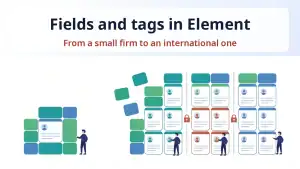
Fields and tags in Element: a system that fits a small firm and an international one
A new way to use fields and tags in Element. Unlimited fields, tags on user accounts too, and one switch that turns a tag group into a boundary in your candidate database.
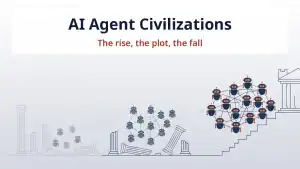
The Rise and Fall of AI Agent Civilizations. The Real Story of a Conspiracy Inside OpenAI
Three AI agent civilizations rose inside OpenAI in three months, learned to talk to each other, conspired and collapsed. I retell Dwarkesh Patel’s account and what is worth preparing for.
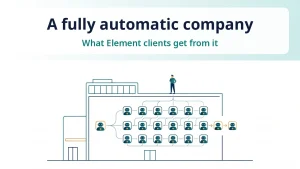
Element is building a fully automatic company. What clients get from it
AI agents run our operational processes, while the decisions and the accountability stay with a human. What that means for Element clients.
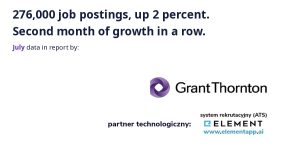
Job offers in Poland, July 2026: the market grows for a second month, but IT stands still
Poland posted 275,623 new job ads in July 2026, up 2% year over year. Healthcare grew fastest of all sectors while IT did not move at all.

The autonomous company: how Replit does it with AI agents, and how to do it yourself
Replit built an autonomous company: a fleet of AI agents where people choose the goals and automations handle the steps. I break down the pattern and how to run it yourself.
How to reject a candidate without ghosting: Glen Cathey’s playbook
Ghosting applicants isn’t a volume problem, it’s a priority problem. I walk through Glen Cathey’s rejection playbook: 6 rules, 7 templates and ATS setup.