
AI isn't taking jobs. Companies that invest in it hire more
The loudest forecast of the past two years says artificial intelligence will wipe out millions of jobs. The freshest data points the other way: companies that invest seriously in AI grow their headcount by 10.2% within two years of adoption, faster than comparable firms that do not. The figure comes from Ramp Economics Lab’s study “A New Look at AI’s Impact on Jobs”, published on 30 June 2026, the first analysis to match real corporate AI spending against hard employment data. Below I break the numbers down and spell out what they mean for employers and HR teams.
What the data shows
The authors combined two datasets that rarely sit side by side: real company payments for AI tools, meaning corporate card and bill-pay records from the Ramp platform, and monthly employment data for those same firms from Revelio Labs, a platform that collects and analyzes workforce data. The panel covered 21,599 U.S. companies and was observed month by month from January 2021 to February 2026. That matters, because earlier work leaned mostly on surveys and self-reported declarations, whereas here a real expense is set against a real job. In fairness I should add that this is an observational analysis, so it shows co-occurrence rather than hard cause and effect. The results are laid out in the full research paper, and independently of Ramp they were also reported by PRNewswire.
The entire increase is driven by heavy adopters
The data points clearly to one relationship: the rise in headcount is driven solely by firms that adopt AI intensively. Simply buying a few licenses and tinkering with the tools now and then produces no measurable hiring effect. Only companies with high AI spending per employee grow noticeably faster than the rest. In other words, what matters is not the mere presence of AI in a company, but the scale and seriousness of the rollout.
Even junior roles are growing
The result I find most interesting concerns entry-level positions. The popular thesis, which I find persuasive too, runs like this: AI will hit junior roles first, because their tasks are the easiest to automate. Ramp’s data shows the opposite direction, because at the companies investing most in AI, entry-level headcount rose by 12% within two years of adoption. A serious adopter does not lay juniors off, it hires them, because a growing company needs people at every level.
Small firms: less often, but more intensively
A separate thread concerns small firms. They adopt AI less often than the big players, but once they decide to, they do it more intensively and with a larger effect. It makes sense to me, because in a small organization a good AI tool unlocks capabilities that previously required hiring a separate team, so instead of cutting jobs the firm gains room to grow. I am, at least in a sense, an example of such a company myself. Even though my business keeps growing, instead of adding headcount I add AI agents.
What this means for employers and HR
So what follows for an employer, an HR manager and a business owner? If a serious AI rollout goes hand in hand with more hiring rather than less, then the edge stops being the mere ownership of tools and becomes the speed and quality of hiring. A company that grows headcount by 10% in two years pushes far more candidates through its recruitment process, so a well-organized process starts to genuinely decide the outcome. That is exactly why I spend my days building the recruitment system Element, which keeps that process in order. The paradox is that the more seriously a company moves into AI, the more human recruitment it has to handle, not less.
What the data does not say
To close, honestly about the limits of these conclusions. The study covers U.S. firms, rests on correlation, and the effect shows up mainly among real, intensive users, so it is not proof that every AI rollout automatically creates jobs. Ramp itself stresses that we are talking about companies that genuinely invest in AI, not the whole economy. So I would not be honest if I turned this data into a slogan that AI always means more work. The report’s data says something narrower but important: among firms that treat AI seriously, fears of mass layoffs have not materialized so far. In my view this comes down to two things: on one side the potential of AI keeps growing and opens new avenues for people and organizations to develop, and on the other AI is still not a mature enough technology to do work at a level close to an average specialist.
DISCOVER ELEMENT!
Maciej Michalewski
CEO @ Element. Recruitment Automation Software
Recent posts:

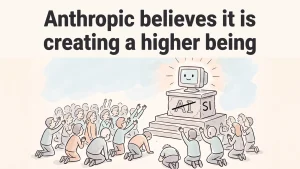
Anthropic believes it is creating a higher being. The dispute over Claude’s constitution
Anthropic teaches Claude that it may refuse even its own maker. I go through the All-In Podcast debate and the warning from Mustafa Suleyman of Microsoft AI.
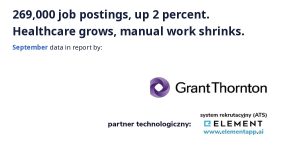
Job offers in Poland, September 2026: growth without industry
In September 2026, employers in Poland posted 269,436 job ads, 2% more than a year earlier. Healthcare grows, and manual work is the only industry in decline.
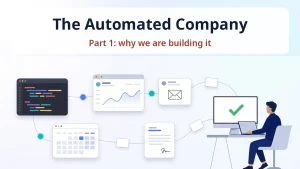
The Automated Company, part 1: why we are building a company run by AI
Part 1 of The Automated Company series: why Element hands routine work to automation and where people still make the decisions.

Element races ahead: Slack, default filters and global template updates
We had barely refreshed Element’s look when a Slack integration, default filters, global message template updates and adding candidates straight from a CV arrived.
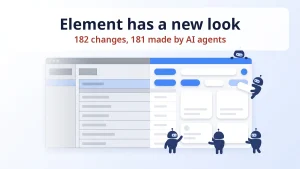
Element’s new look: another job done well by AI agents under human supervision
Element has a new look: Material 3 on top of a frontend rewritten from Angular 13 to 18, with 181 of 182 code changes made by AI agents under human supervision.
Job offers in Poland, August 2026: more ads, fewer jobs
Poland posted 257,046 new job ads in August 2026, up 4% year over year, even as employment in the enterprise sector fell. Data from the Grant Thornton report and my take.