


Big Tech and politics - the effects of events in the USA on social networks
I am interested in technology, the most obvious manifestation of which is naturally Element. At the same time, the USA’s recent developments and their relationship with technology, and more specifically with social networks, are so interesting that I decided to write this article that has nothing to do with our recruitment system, with recruiting and with the HR area in general.
To the point.
Big Tech is the largest IT company in the USA. They include mainly Amazon, Apple, Google, Facebook, and Microsoft. In political discourse, Twitter is also often classified as Big Tech due to its enormous potential for disseminating information and a special role in political campaigns since Donald Trump started his Twitter activity.
Trump’s term in office has brought about a lot of controversies, the apogee of which in the context of Big Tech is currently being observed:
- Trump’s Twitter account was blocked, and all posts were deleted.
- Twitter account Official US President (@POTUS) – Recent Trump posts are being deleted, but the account has not been banned.
- Trump’s Facebook account was banned.
- Trump’s Instagram account was banned.
What are American Conservatives doing at this point? They are moving massively to the Parler messenger, which guarantees greater freedom of published content and brings promises of no censorship known from Twitter, Facebook, and YouTube.
The transfer of users to Parler is so large that the application cannot run smoothly, and in recent days there have been problems with its operation.
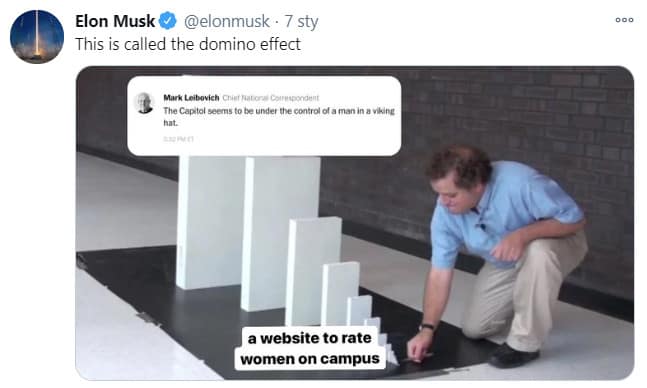
At the same time, Elon Musk, who has been criticizing Facebook since the Cambridge Analytica scandal (he removed his own profile, Tesla or Space-X from this portal), first pointed to the relationship between Facebook and the current political tension:
He then pointed out Signal as an alternative to Facebook Messenger to 41 million of his Twitter followers:
Please also:
- Get to know our ATS, which makes recruitment easy and effective;
- Read other related posts:
DISCOVER ELEMENT!
Maciej Michalewski
CEO @ Element. Recruitment Automation Software
Recent posts:

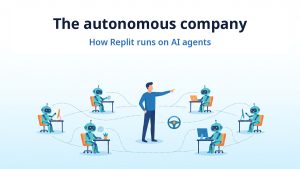
The autonomous company: how Replit does it with AI agents, and how to do it yourself
Replit built an autonomous company: a fleet of AI agents where people choose the goals and automations handle the steps. I break down the pattern and how to run it yourself.
How to reject a candidate without ghosting: Glen Cathey’s playbook
Ghosting applicants isn’t a volume problem, it’s a priority problem. I walk through Glen Cathey’s rejection playbook: 6 rules, 7 templates and ATS setup.


Poland’s job market turns positive: 259,000 postings, all ten cities growing
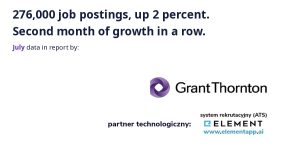
Poland posted 259,000 job ads in June 2026, the first positive year-over-year reading in more than a year. The Grant Thornton and Element report reads it as a cautious but real turnaround.

What’s new in Element: a month of concrete improvements for recruiters
A roundup of what’s new in Element this month: saved filters, GDPR and consent tracking, candidate SMS, a new public API, and stronger data security.

Career in the age of AI agents: what really counts, per Phil Chen
Phil Chen (Helm AI, Scale, OpenAI, DeepMind) argues that in the age of AI agents, finding problems, the last mile and reputation matter more than solving tasks. A summary plus my HR take.

AI isn’t taking jobs. Companies that invest in it hire more
A Ramp study of 21,599 US firms finds that companies investing seriously in AI grow headcount 10.2% in two years, including entry-level roles. The data pushes back on AI job-loss panic.