
Biometrics in recruitment - candidates' profiles screening
On 13 December 2018, a group of scientists from the Centre for Market Research and Analysis from Kutna, Poland, was welcomed in our headquarters in Gdynia, where Element ATS is being developed.
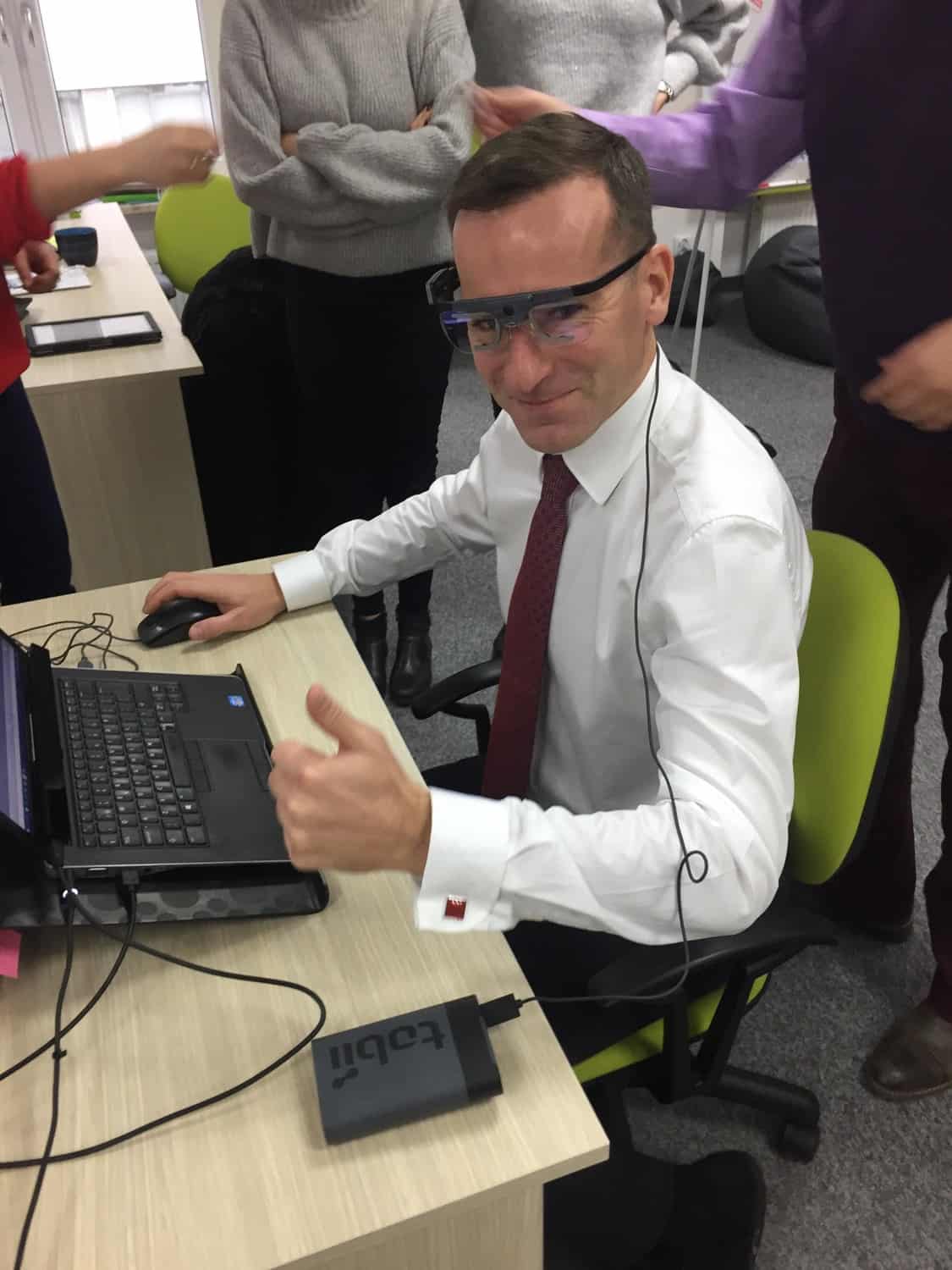
The meeting aimed to conduct biometric research on the method of screening profiles of candidates participating in the recruitment processes. Several recruiters took part in the study, including me.
The examination of the way of analyzing candidates’ CVs was carried out using biometric devices. One device, a detector attached to the laptop, tracks the eye of the examined person and analyzes which elements of the candidate’s profile the eyesight is directed at. The second device – glasses – supports the first one.
How did the experts and their tools help us develop the technologies used in the ATS Element?
The technology we develop supports many areas related to recruitment processes. One of these areas is the analysis of the profiles of the candidates.
While developing the algorithms of the functionality analyzing the content of profiles, we decided to check how an experienced recruiter carries out such analysis. Thanks to biometric research technology, we can thoroughly investigate this process. The research devices, which follow the eyesight, verify in what order and how quickly the recruiter reads the profile, and which elements of the profile take more time to be analyzed. This research provides valuable information that will allow us to program an algorithm that automates these activities on the pattern of an experienced recruiter.
Thanks to such insightful research, Element we hope to develop a tool automating the selection of candidates.
This tool will be a part of our ATS (click here to learn what is an ATS) and should significantly shorten the recruiter’s work during the candidate preselection process.
#biometrics #research #CV #analyzes #recruitment #ats #element
Maciej Michalewski
CEO @ Element. Recruitment Automation Software
Recent posts:

The AI job apocalypse is a fantasy, says a16z. But Poland?
David George of a16z says the AI job apocalypse is a fantasy. I test his thesis against Polish data and a fresh vibe coded experiment of my own.

Vibe Coded Element x LinkedIn integration is live: project recap
LinkedIn approved Element’s public XML feed, fully built in vibe coding mode with Claude Code. What that means for people who don’t write code.

danehr.pl: a new data hub for the Polish labour market
Polskie Forum HR has launched danehr.pl, a portal that gathers employment, wages, unemployment and labour market reports in one place. Element is the technology partner of PFHR and feeds one of the portal’s sections.

The Great Reorg: companies are rebuilding around AI
Foundation Capital interviewed 25 companies and found that AI is not just speeding up work — it is forcing organizations to rebuild from the ground up around four human roles.

Gallup 2026: the workplace is cracking and managers lose drive faster than the rest
Gallup State of the Global Workplace 2026: engagement fell to 20%, managers lose drive faster than their teams, and the AI paradox is clear: personal productivity rises, organizational does not.

A Polish-founded robot that drives screws faster than humans
A Polish-founded robot that drives screws faster than humans When people think about automation, they usually picture chatbots, image generators, and coding assistants. Meanwhile, AI