
IT recruitment on the Polish market in Q1 2020. Element ATS Report.
Pandemic is a time when I can focus more on working with the programming team developing our ATS, as well as on creating more reports. Therefore, here we have yet another report, which presents data on recruitment activities in the Polish IT market.
The data comes from the tools used in our ATS to monitor the recruitment market. Thanks to these tools, our recruitment system analyses the content of job ads published on several dozen job boards and Linkedin portal.
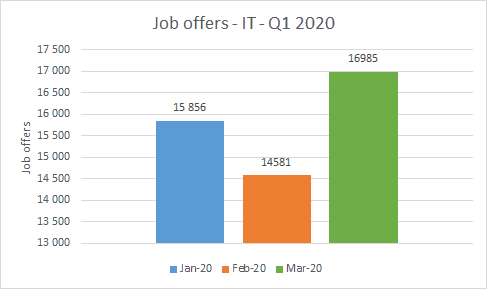
The first list is the number of job offers in the IT industry, registered by our ATS, broken down into individual months of the first quarter. It is worth mentioning here that in the first quarter of this year, more than 3000 companies have published job offers.
More offers in the IT industry - ATS Element report
Our data shows that, contrary to our fears, there was a significant increase in the number of job offers in March. This increase is exceptional in the scale of the whole market. According to our previous research, the vast majority of the labor market recorded strong declines in recent weeks. Links to other reports can be found at the end of the article.
companies publishing the most offers - ATS Element report
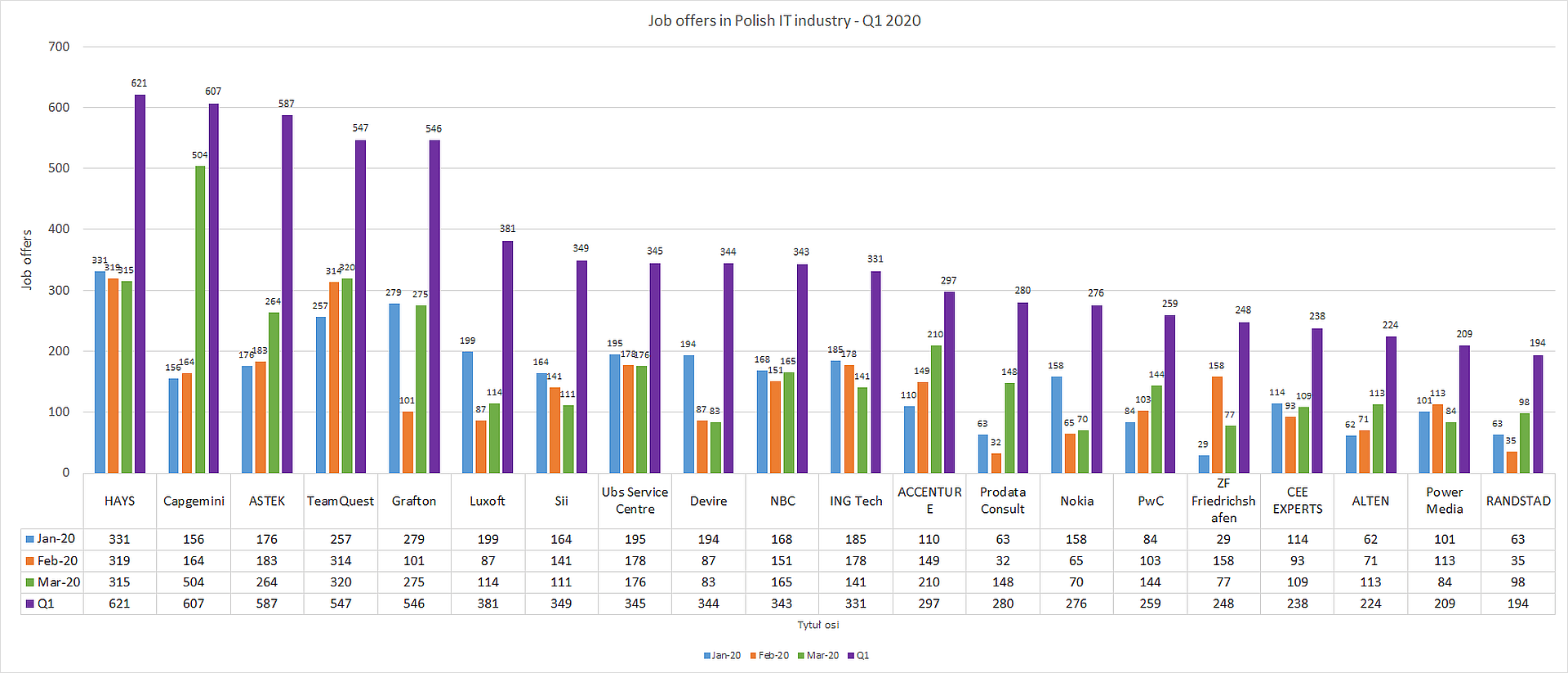
The second list presents twenty companies that published the most job offers in the IT industry in the first quarter. The graph presents the number of recruitment offers in particular months, as well as in the entire first quarter. Among the leaders we have such entities as Hays, Capgemini, Astek, TeamQuest, Grafton, Luxoft and Sii.
(click to enlarge)
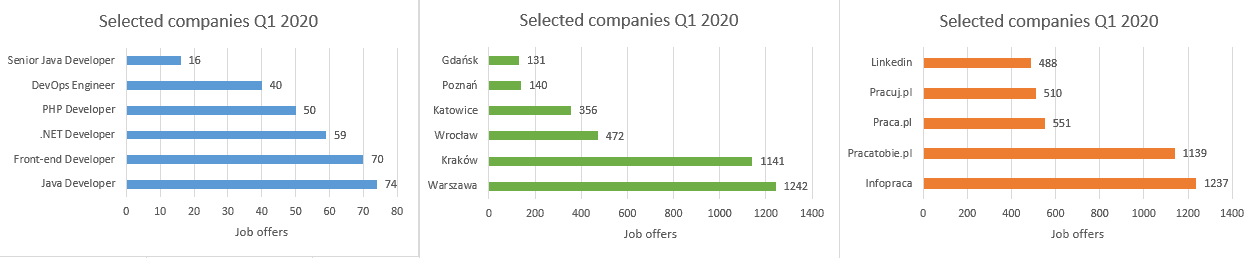
- the most frequently appearing jobs
- the most frequent recurring locations
- most frequently used recruitment portals
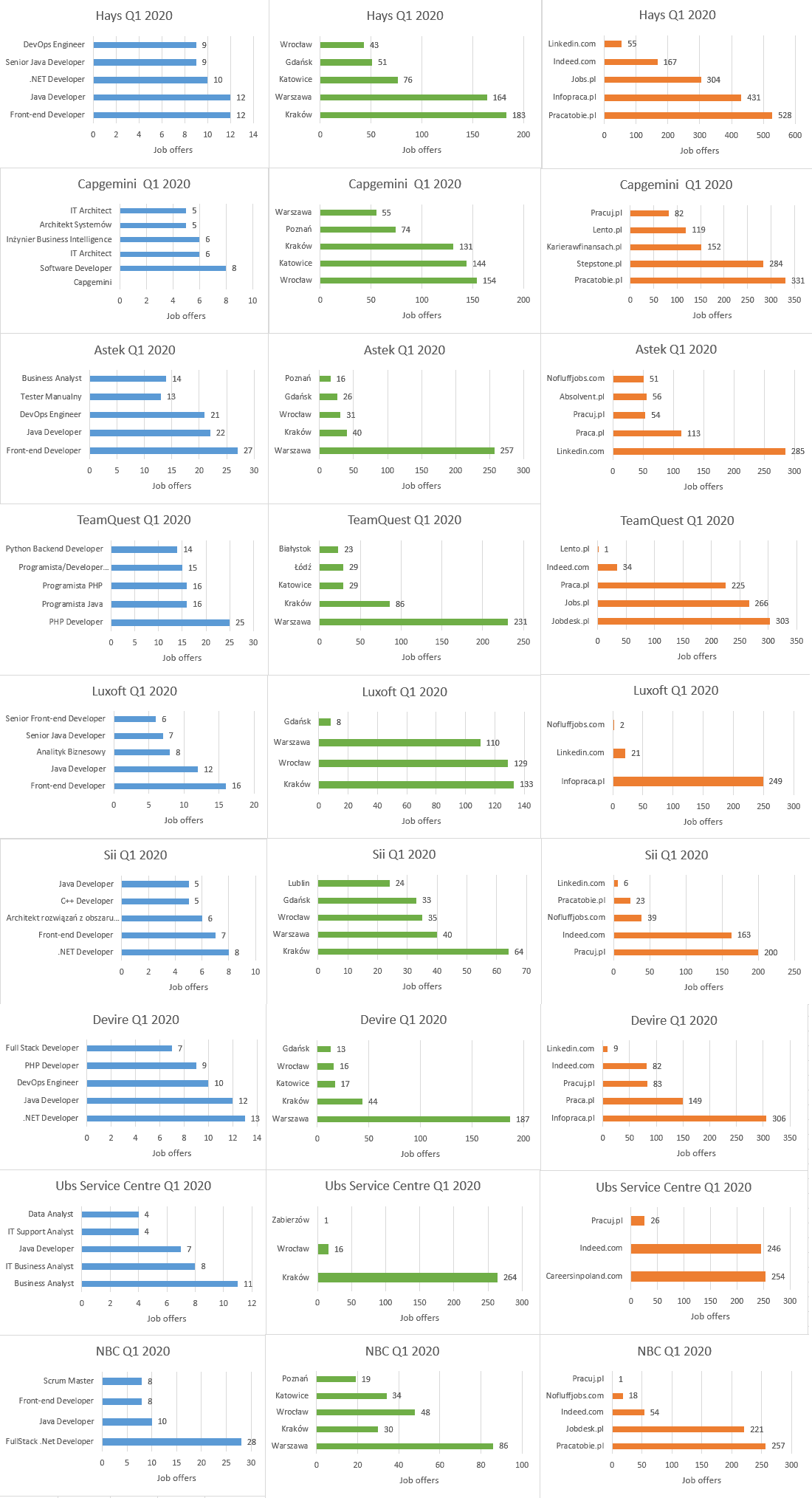
and broken down into individual companies (click to enlarge):
I limit my role primarily to providing job offers data from Element ATS, so I will not make a wider comment here. I will just point out that the increase in the number of recruitment offers in March is interesting. I wonder to what extent this increase results from the actual increase in employers’ recruitment needs, and to what extent it is a result of the strategy of building a database of candidates who are certainly much more active on the recruitment market during the pandemic.
Related posts:
- Element ATS recruitment report – selected positions, Polish market, Q1 2020
- Element ATS recruitment report – selected industries, Polish market, Q1 2020
- Element of ATS recruitment report – who recruits recruiters on Polish market, March 2020
- How we gather data for recruitment reports
hashtags# report jobs offers ads recruitment ats Element
Maciej Michalewski
CEO @ Element. Recruitment Automation Software.
Recent posts:

The autonomous company: how Replit does it with AI agents, and how to do it yourself
Replit built an autonomous company: a fleet of AI agents where people choose the goals and automations handle the steps. I break down the pattern and how to run it yourself.

How to reject a candidate without ghosting: Glen Cathey’s playbook
Ghosting applicants isn’t a volume problem, it’s a priority problem. I walk through Glen Cathey’s rejection playbook: 6 rules, 7 templates and ATS setup.

Poland’s job market turns positive: 259,000 postings, all ten cities growing
Poland posted 259,000 job ads in June 2026, the first positive year-over-year reading in more than a year. The Grant Thornton and Element report reads it as a cautious but real turnaround.

What’s new in Element: a month of concrete improvements for recruiters
A roundup of what’s new in Element this month: saved filters, GDPR and consent tracking, candidate SMS, a new public API, and stronger data security.

Career in the age of AI agents: what really counts, per Phil Chen
Phil Chen (Helm AI, Scale, OpenAI, DeepMind) argues that in the age of AI agents, finding problems, the last mile and reputation matter more than solving tasks. A summary plus my HR take.

AI isn’t taking jobs. Companies that invest in it hire more
A Ramp study of 21,599 US firms finds that companies investing seriously in AI grow headcount 10.2% in two years, including entry-level roles. The data pushes back on AI job-loss panic.