
IT recruitment on the Polish market in Q1 2020. Element ATS Report.
Pandemic is a time when I can focus more on working with the programming team developing our ATS, as well as on creating more reports. Therefore, here we have yet another report, which presents data on recruitment activities in the Polish IT market.
The data comes from the tools used in our ATS to monitor the recruitment market. Thanks to these tools, our recruitment system analyses the content of job ads published on several dozen job boards and Linkedin portal.
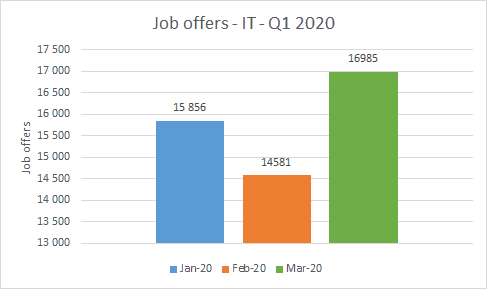
The first list is the number of job offers in the IT industry, registered by our ATS, broken down into individual months of the first quarter. It is worth mentioning here that in the first quarter of this year, more than 3000 companies have published job offers.
More offers in the IT industry - ATS Element report
Our data shows that, contrary to our fears, there was a significant increase in the number of job offers in March. This increase is exceptional in the scale of the whole market. According to our previous research, the vast majority of the labor market recorded strong declines in recent weeks. Links to other reports can be found at the end of the article.
companies publishing the most offers - ATS Element report
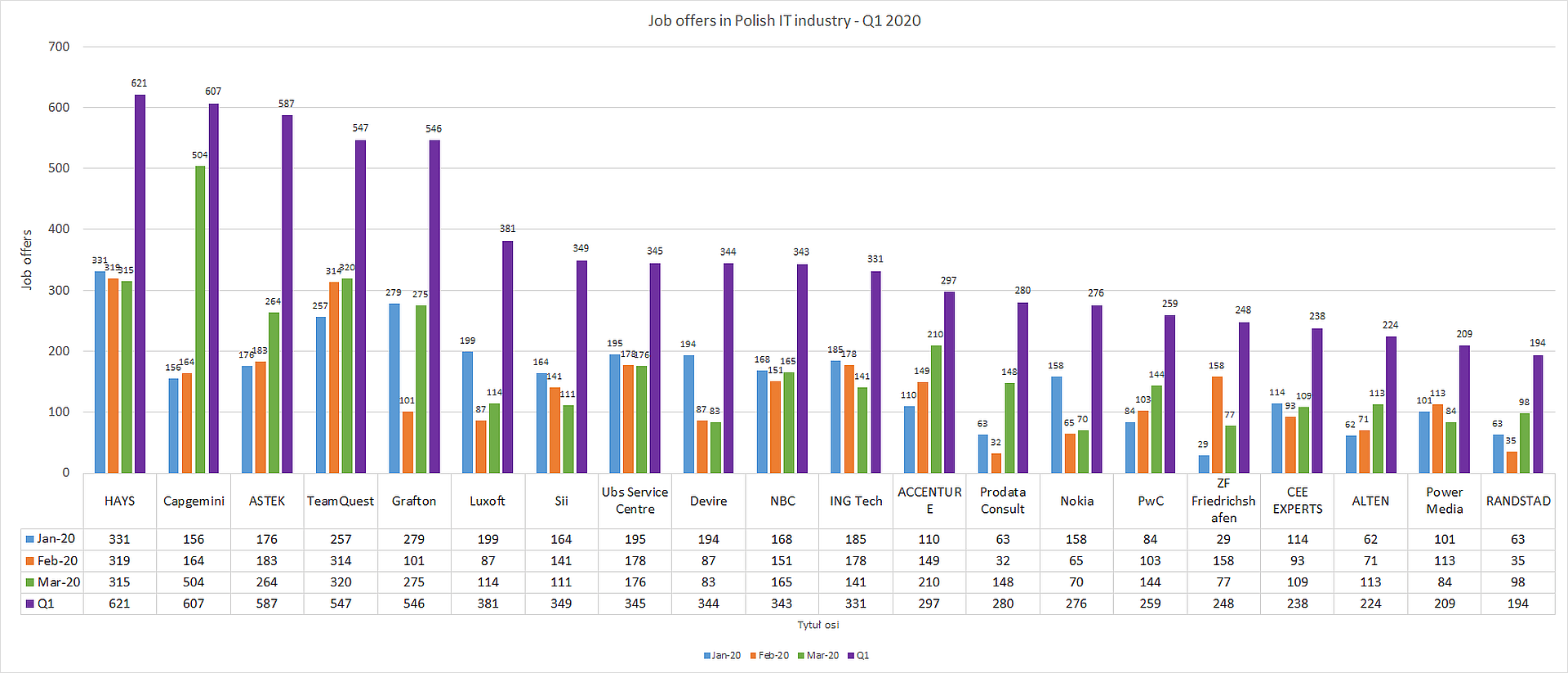
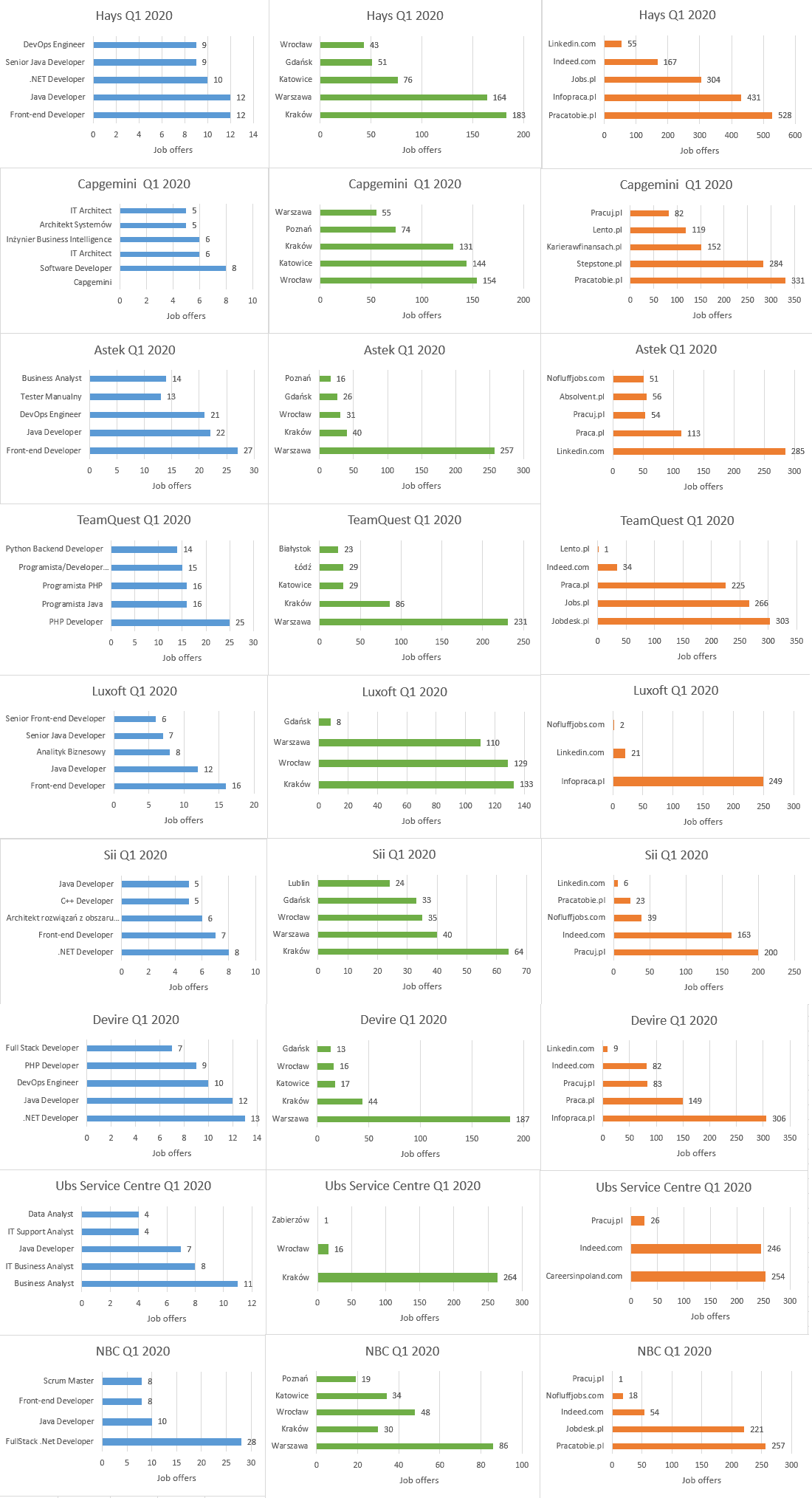
The second list presents twenty companies that published the most job offers in the IT industry in the first quarter. The graph presents the number of recruitment offers in particular months, as well as in the entire first quarter. Among the leaders we have such entities as Hays, Capgemini, Astek, TeamQuest, Grafton, Luxoft and Sii.
(click to enlarge)
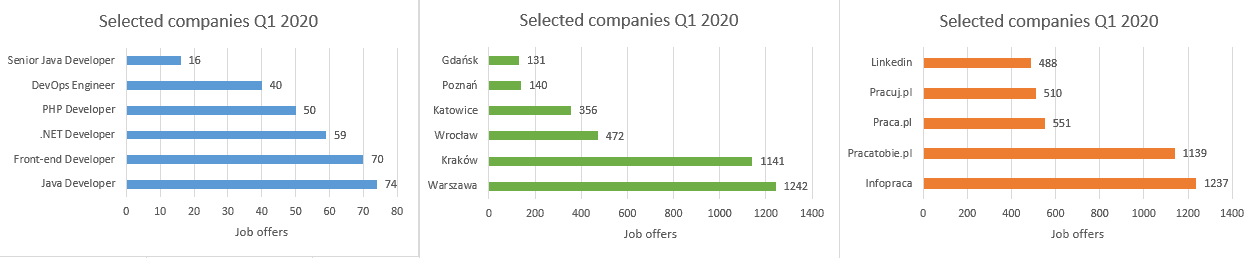
- the most frequently appearing jobs
- the most frequent recurring locations
- most frequently used recruitment portals
and broken down into individual companies (click to enlarge):
I limit my role primarily to providing job offers data from Element ATS, so I will not make a wider comment here. I will just point out that the increase in the number of recruitment offers in March is interesting. I wonder to what extent this increase results from the actual increase in employers’ recruitment needs, and to what extent it is a result of the strategy of building a database of candidates who are certainly much more active on the recruitment market during the pandemic.
Related posts:
- Element ATS recruitment report – selected positions, Polish market, Q1 2020
- Element ATS recruitment report – selected industries, Polish market, Q1 2020
- Element of ATS recruitment report – who recruits recruiters on Polish market, March 2020
- How we gather data for recruitment reports
hashtags# report jobs offers ads recruitment ats Element
Maciej Michalewski
CEO @ Element. Recruitment Automation Software.
Recent posts:

You get an email from AI instead of a human, problem?
Getting an email from AI instead of a human is fine, as long as the data stays high quality. Most routine work is algorithmic, and the outcome matters more than the author of the message.

The AI job apocalypse is a fantasy, says a16z. But Poland?
David George of a16z says the AI job apocalypse is a fantasy. I test his thesis against Polish data and a fresh vibe coded experiment of my own.

Vibe Coded Element x LinkedIn integration is live: project recap
LinkedIn approved Element’s public XML feed, fully built in vibe coding mode with Claude Code. What that means for people who don’t write code.

danehr.pl: a new data hub for the Polish labour market
Polskie Forum HR has launched danehr.pl, a portal that gathers employment, wages, unemployment and labour market reports in one place. Element is the technology partner of PFHR and feeds one of the portal’s sections.

The Great Reorg: companies are rebuilding around AI
Foundation Capital interviewed 25 companies and found that AI is not just speeding up work — it is forcing organizations to rebuild from the ground up around four human roles.

Gallup 2026: the workplace is cracking and managers lose drive faster than the rest
Gallup State of the Global Workplace 2026: engagement fell to 20%, managers lose drive faster than their teams, and the AI paradox is clear: personal productivity rises, organizational does not.