
Monitoring Recruitment Agency Client Needs
One of the most common ways recruitment agencies pick up new projects is by keeping an eye on job postings that employers publish, then reaching out to companies that are actively hiring.
In practice, agencies learn about new recruitment needs in a few ways:
- Direct contact with the client;
- Market intelligence – tips from candidates who work at a given company, industry contacts who know about upcoming hires, and so on;
- Monitoring published job ads.
That third method – scanning job boards – is surprisingly labor-intensive. There are dozens of portals and other places where companies post openings. (We maintain Poland’s largest list of job boards and candidate sources here.)
The good news is that job posting monitoring can be automated. Most popular ATS systems in Poland and elsewhere don’t offer this, though. Element does.
Keeping tabs on the recruitment needs of companies – prospects and existing clients alike – is hard. Not just because of how many job boards exist, but because of how many companies you need to track.
The longer a recruitment agency has been operating, the bigger its client database grows. More companies means more recruitment projects to manage, and less time left over for scouting new ones. You will inevitably miss some companies at the right moment and lose the chance to win their project.
It gets worse when recruitment needs aren’t managed centrally within a client organization. Your contact person might not even know about new vacancies that have popped up in other departments or divisions. You ask them, they say “nothing right now,” and meanwhile their logistics team posted three openings last week.
Anyone who has worked in recruitment agency sales knows this problem well. When I was running sales at my own recruitment firm, I spent too much time manually checking portals for new postings from companies I already knew. At some point the obvious question hit me: why isn’t the ATS system doing this for me? The system already has a database of all the companies the agency works with. It should be able to monitor job boards for postings from those specific companies and tell me when something new appears. That’s what we built into Element.
ATS Element automatically monitors job boards
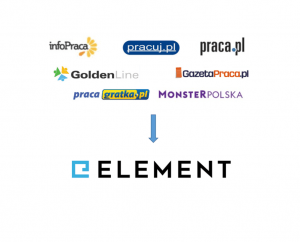
We spent a long time building an algorithm that reads and parses web page content. We then connected it to the ATS system Element and to popular recruitment portals like pracuj.pl.
So how does it actually work?
Element has two main modules: an ATS for managing recruitment processes, and a CRM for managing client relationships. The CRM is where recruitment agencies store their clients and prospects – companies they work with or would like to work with.
- No more manually browsing job boards every morning.
- You learn about a new posting right away, so you can respond before competitors do.
- You won’t miss a posting from a company you care about just because you didn’t check that day.
- There’s a certain peace of mind in knowing the system is watching even when you’re busy with other things.
That said, automated monitoring doesn’t replace direct client contact. Even if Element covered every portal out there (we’re working on expanding coverage) and every company career page, there are things it can’t catch:
- Relationships matter. Staying in touch with clients even when they have no open positions keeps the door open for when they do.
- Some companies never publish job postings publicly.
- Confidential searches, by definition, won’t show up on any job board.
But wherever we can take tedious manual work off our users’ plates, we try to. This feature is a good example.
We also use the same job board monitoring technology to power our HR Jobs portal, which aggregates the latest HR job offers and calculates average HR salaries based on rates published in those postings.
DISCOVER ELEMENT!
Maciej Michalewski
CEO @ Element. Recruitment Automation Software
Recent posts:

Fields and tags in Element: a system that fits a small firm and an international one
A new way to use fields and tags in Element. Unlimited fields, tags on user accounts too, and one switch that turns a tag group into a boundary in your candidate database.

The Rise and Fall of AI Agent Civilizations. The Real Story of a Conspiracy Inside OpenAI
Three AI agent civilizations rose inside OpenAI in three months, learned to talk to each other, conspired and collapsed. I retell Dwarkesh Patel’s account and what is worth preparing for.
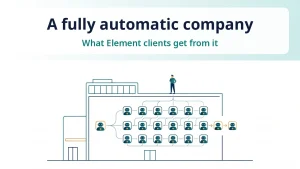
Element is building a fully automatic company. What clients get from it
AI agents run our operational processes, while the decisions and the accountability stay with a human. What that means for Element clients.

Job offers in Poland, July 2026: the market grows for a second month, but IT stands still
Poland posted 275,623 new job ads in July 2026, up 2% year over year. Healthcare grew fastest of all sectors while IT did not move at all.

The autonomous company: how Replit does it with AI agents, and how to do it yourself
Replit built an autonomous company: a fleet of AI agents where people choose the goals and automations handle the steps. I break down the pattern and how to run it yourself.

How to reject a candidate without ghosting: Glen Cathey’s playbook
Ghosting applicants isn’t a volume problem, it’s a priority problem. I walk through Glen Cathey’s rejection playbook: 6 rules, 7 templates and ATS setup.